The January 4th Liquidity Cliff: Tether, Binance, and the Systemic Crypto Deleveraging
Executive summary
The crypto market is entering a period of acute, binary event risk following Senator Richard Blumenthal’s formal demand for documentation from Binance, Tether, World Liberty Financial, and Fight Fight Fight LLC, setting a hard deadline of January 4, 2027. This is not merely a regulatory headline; it is a structural threat to the primary liquidity rails of the digital asset ecosystem. The concurrent news of Binance France closing user accounts by year-end signals a broader, coordinated regulatory squeeze. We are tracking a cascading liquidity event: as stablecoin-dependent rails face potential disruption, we expect a forced deleveraging of crypto-native balance sheets, a decoupling of crypto-proxies like Coinbase (COIN) and MicroStrategy (MSTR), and a non-obvious liquidity drain that is already bleeding into high-beta tech and semiconductor equities (NVDA, TSM). Investors should prepare for a "liquidity trap" where traditional correlations break down under the pressure of forced margin calls.
Major Events & Direct Impacts (Layer 1)
The primary catalyst is the January 4, 2027, deadline issued by Senator Blumenthal. By targeting Tether (the industry’s dominant stablecoin) and Binance (the largest liquidity venue), the inquiry strikes at the heart of crypto market structure.
- Stablecoin Vulnerability: Tether sits at the center of global crypto trading. Any credible threat to its operational status or liquidity reserves forces market makers to re-evaluate their exposure to "USDT-denominated" risk. This creates an immediate contraction in liquidity as traders move toward fiat-on-ramps or regulated alternatives.
- Exchange Fragmentation: The Binance France account closures (effective Dec 31) are a symptom of the broader MiCA-driven (Markets in Crypto-Assets) regulatory environment. This forces a structural migration of liquidity away from centralized offshore exchanges toward regulated, US-listed ETFs (IBIT, FBTC).
- Market Reaction: We are observing a flight-to-quality in the crypto space. BTC and ETH are seeing increased volatility as traders hedge against the "binary event" risk of the Jan 4 deadline, while altcoins (SOL, XRP) are experiencing disproportionate selling pressure as they are the first to be liquidated when stablecoin liquidity tightens.
Secondary Effects & Sector Rotation (Layer 2)
The direct impacts are triggering a predictable, yet painful, rotation in crypto-exposed equities and lending protocols.
- De-risking of Crypto-Proxies: Equities like COIN and MSTR, which have historically served as institutional beta-plays on crypto, are now suffering from "regulatory guilt by association." As the market anticipates a contraction in the primary stablecoin liquidity rail, institutional investors are rotating out of these proxies to mitigate counterparty risk.
- Forced Altcoin Liquidation: The "Stablecoin-to-Altcoin" bridge is breaking. Market makers, facing uncertainty regarding Tether, are reducing their inventory of volatile altcoins (SOL, ADA) to ensure they hold sufficient fiat liquidity to meet potential redemption demands or regulatory capital requirements.
- Lending Protocol Contraction: DeFi lending platforms, which often rely on stablecoin collateral, are seeing a spike in liquidation-risk premiums. As the value of collateral fluctuates and stablecoin liquidity dries up, we are seeing the unwinding of leverage, creating a feedback loop of forced selling.
Macro Propagation & Cross-Asset Flows (Layer 3)
The ripple effects of this crypto-specific volatility are migrating into the broader equity market, creating a liquidity drain that is hitting growth-sensitive indices.
- Liquidity Contraction in Risk-On Equities: Crypto-native liquidity providers are not isolated. When they face margin pressure in their crypto portfolios, they are forced to liquidate their most liquid, high-beta equity holdings to preserve cash. This is creating a "risk-off" contagion, where volatility in RTY (Russell 2000) and QQQ (Nasdaq-100) is being exacerbated by crypto-linked deleveraging.
- Flight to Quality (USD/Gold): As the crypto-ecosystem faces a "trust crisis," capital is retreating to the ultimate safe havens: the US Dollar (DXY) and physical gold (GLD, GC). This is putting downward pressure on EM currencies, particularly the Indian Rupee (USDINR), as FIIs (Foreign Institutional Investors) withdraw capital from emerging markets to cover global margin requirements.
- Institutional Balance Sheet Deleveraging: Financial institutions with exposure to crypto-settlement layers are being forced to increase capital buffers. This regulatory-induced caution is leading to the selling of liquid assets, further weighing on the XLF (Financials ETF) and increasing implied volatility (VXX).
Non-Obvious Connections & Hidden Risks (Layer 4)
The most critical, yet overlooked, connection is the "Stablecoin-to-Semis" liquidity trap.
- The Semis Liquidity Trap: Because crypto-native funds often hold high-beta AI/Semiconductor stocks (NVDA, TSM) as a "growth" proxy, they are being forced to liquidate these positions to meet margin calls triggered by the crypto liquidity squeeze. This creates a temporary, artificial correlation between crypto and AI stocks. The sell-off in NVDA is not necessarily a reflection of AI fundamentals, but rather a reflection of the "liquidity fungibility" of modern institutional portfolios.
- The Safe Haven Paradox: We are seeing a breakdown in the traditional inverse correlation between Gold and the USD. In this scenario, both are rallying as investors reject both the "digital rail" (crypto) and "local fiat" (EM currencies) in favor of hard assets and the world's primary reserve currency.
- VXX as a Tether Proxy: The options market is currently mispricing the Jan 4 event. Hedging activity in crypto is spilling into broad equity volatility (VXX), as market makers increase premiums on QQQ puts to account for the potential "flash crash" in crypto-proxies.
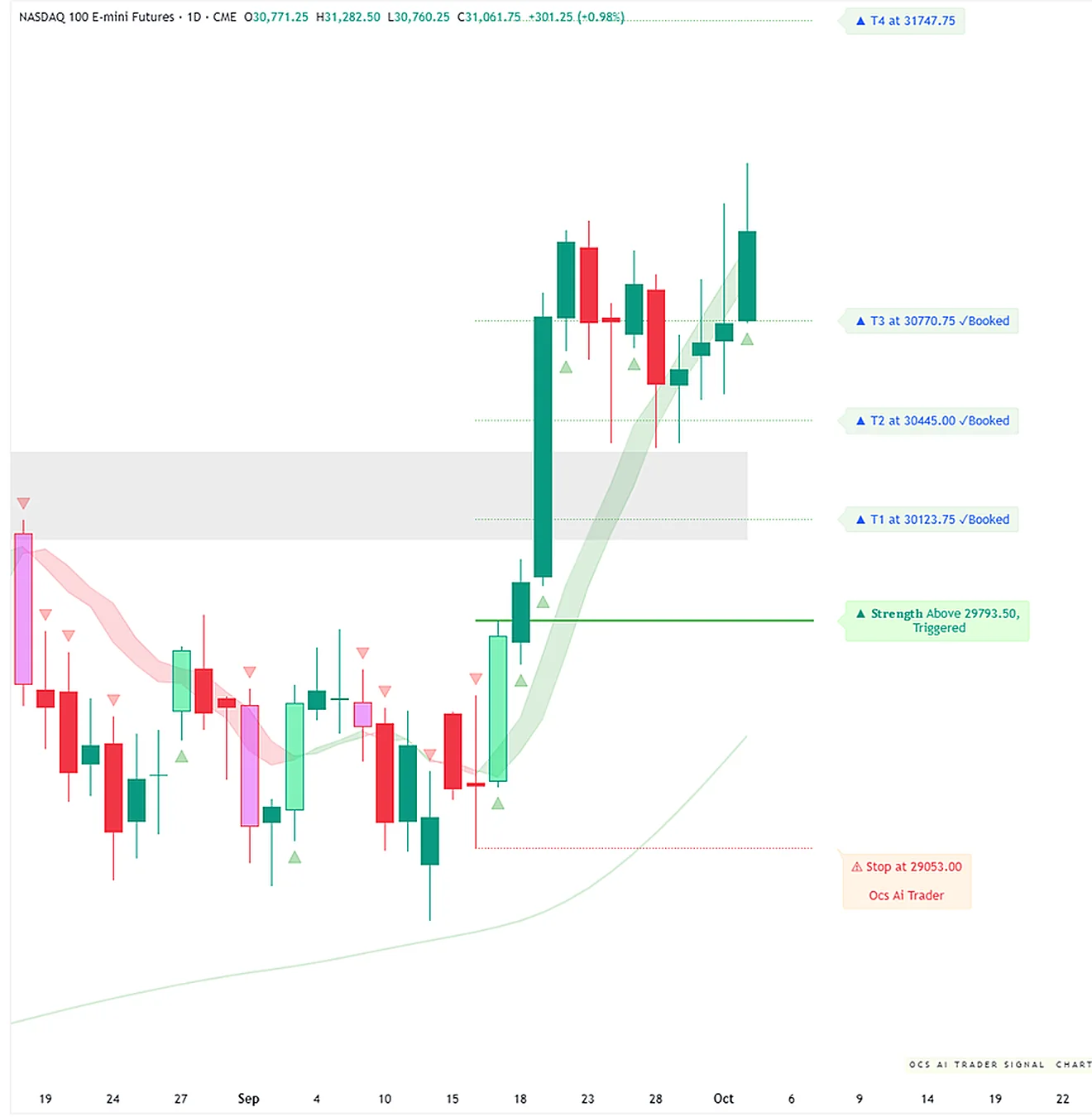
Unified OCS Chart Read
Note: OCS chart evidence is currently deferred to the asynchronous repair queue. The following analysis is based on available market data and technical indicators.
- BTC: Currently trading at $33.50. The RSI(14) of 38.9 suggests the asset is approaching oversold territory but lacks the momentum to reverse the current downtrend. The MACD is negative (-0.49), confirming the bearish drift. The Bollinger Bands (Upper 37.72, Lower 33.37) indicate the price is testing the lower bound, a critical support level. A break below $33.00 would likely trigger a wave of stop-losses.
- ETH: Trading at $21.21. Similar to BTC, the technicals are weak (RSI 39.52, MACD -0.58). The price is hovering near the lower Bollinger Band (20.92). The setup is "hands-off" until we see a stabilization in the broader crypto liquidity environment.
- COIN: Trading at $134.76. The RSI(14) of 33.56 is dangerously close to oversold, but the MACD of -10.5 indicates strong bearish momentum. With the Bollinger Band mid-line at 161.77, the stock is significantly extended to the downside. The options chain shows heavy volume in the $126 and $130 puts, suggesting institutional hedging against further downside.
- MSTR: Trading at $128.93. The RSI(14) of 41.45 suggests slightly more resilience than COIN, but the MACD of -3.51 confirms the negative trend. The stock is testing the lower Bollinger Band (126.02).
Security-by-Security Analysis
BTC (Bitcoin)
- Snapshot: $33.50 (-0.39%).
- Analysis: BTC is the bellwether for the "Jan 4" event. The primary risk is not just the price action, but the potential for a liquidity shock if Tether usage is restricted.
- Levels to Watch: $33.00 (Support), $35.00 (Resistance).
- Risk: High. The binary nature of the Blumenthal deadline makes this a "wait-and-see" environment.
ETH (Ethereum)
- Snapshot: $21.21 (-0.89%).
- Analysis: ETH is suffering from the dual pressure of stablecoin liquidity contraction and the "store of value" narrative shift.
- Levels to Watch: $21.00 (Psychological support), $22.00 (Resistance).
- Risk: High. ETH’s role in DeFi makes it more sensitive to stablecoin de-pegging risks than BTC.
COIN (Coinbase)
- Snapshot: $134.76 (-1.51%).
- Analysis: COIN is the primary institutional proxy. The heavy put volume ($126 and $130 strikes) suggests the market is bracing for a further breakdown.
- Levels to Watch: $131.55 (Day low), $150.00 (Resistance).
- Risk: Elevated. Regulatory "guilt by association" is the primary driver here.
MSTR (MicroStrategy)
- Snapshot: $128.93 (-0.29%).
- Analysis: MSTR is trading as a high-beta BTC derivative. Its correlation with the underlying is tight, but its sensitivity to broader market liquidity is higher.
- Levels to Watch: $125.59 (Day low), $140.00 (Resistance).
- Risk: Elevated. The leverage inherent in MSTR’s balance sheet makes it sensitive to any tightening in credit/liquidity conditions.
Historical Parallels
The current environment bears striking similarities to the period preceding the FTX collapse in late 2022. Then, as now, the market was ignoring the "plumbing" issues (exchange reserves, stablecoin backing) in favor of price action. The key difference today is the level of institutional integration—the presence of ETFs (IBIT, FBTC) and the involvement of major financial institutions means that a liquidity event in crypto now has a more direct, faster-moving contagion path into the traditional equity markets.
Outlook & Risk Matrix
- Short-Term (1-5 Days): Expect continued volatility. The market will likely "front-run" the Jan 4 deadline, leading to erratic price swings as traders adjust their positions. We expect a "sell the rumors" environment regarding the regulatory inquiry.
- Medium-Term (1-4 Weeks): The market will likely bifurcate. We anticipate a flight of capital from offshore, non-compliant venues to regulated, US-listed entities (ETFs). This will likely lead to a "liquidity premium" for regulated products, while offshore assets may continue to face downward pressure.
- Scenarios:
- Base Case: Continued volatility and a gradual rotation into regulated assets.
- Bear Case: A "flash crash" in liquidity if Tether faces immediate, tangible legal action before Jan 4.
- Bull Case: A "non-event" resolution where the Blumenthal inquiry is seen as a political maneuver, leading to a massive relief rally in crypto-proxies.
What to Watch
- Stablecoin Pegs: Any deviation in USDT/USDC pegs will be the first signal of a systemic liquidity crisis.
- Exchange Reserves: Monitor for outflows from Binance and other major offshore exchanges.
- Semiconductor Correlation: If NVDA/TSM continue to move in lockstep with BTC, it confirms the "liquidity trap" thesis and suggests that broader equity markets are at risk of a crypto-contagion.
- Regulatory Headlines: Any further demands from the Blumenthal committee or other regulatory bodies will be the primary catalyst for short-term price action.
Education and market research only, not financial advice. Charts are OCS AI Trader readings at the time of writing and change with new bars.