Japan’s Spending Slump: The BoJ’s December Dilemma and the Carry-Trade Paradox
The global macro landscape is currently being recalibrated by a singular, persistent friction: the Bank of Japan’s (BoJ) struggle to normalize policy against a backdrop of crumbling domestic demand. The latest data—a 6.8% plunge in Japanese household spending, marking the tenth consecutive monthly decline—has effectively punctured the narrative of a smooth, data-dependent path to a December rate hike.
For institutional investors, this is not merely a localized Japanese economic issue. It is the primary catalyst for a global liquidity repricing. The Yen serves as the world’s primary funding currency for the carry trade; when the BoJ hesitates, it keeps the global risk-on trade on life support. When the BoJ threatens to tighten, it risks a violent, forced liquidation of global equity positions. We are currently trapped in a "Volatility Paradox," where the very policies designed to stabilize the Yen are creating the conditions for a more systemic liquidity shock.
The Layered Impact Analysis
To understand the current market volatility, we must trace the cascading effects of the BoJ’s policy uncertainty through four distinct layers.
Layer 1: Direct Impacts — The USDJPY Divergence
The immediate effect of the 6.8% drop in household spending is a fundamental weakening of the BoJ’s hawkish argument. Markets are now forced to reconcile the BoJ’s stated intention for a December hike with the reality of an economy that cannot sustain higher borrowing costs.
- USDJPY Sensitivity: The pair is caught between the "Summary of Opinions" (which traders hope will confirm a hike) and the "Hard Data" (which screams for a delay). This creates a high-volatility environment where USDJPY struggles to find a directional trend, oscillating around key psychological levels like 150.00.
- DXY Correlation: Because the Yen is a massive component of the DXY, this uncertainty creates a "DXY-drag." The Dollar cannot find a clean trend when its primary counter-weight is being whipsawed by central bank policy ambiguity.
Layer 2: Secondary Effects — The Carry-Trade Feedback Loop
The secondary effect is the persistence of the Yen-funded carry trade. As long as the BoJ maintains a dovish stance due to weak data, the cost of borrowing Yen remains artificially low compared to US or European yields.
- Equity Volatility: This creates a feedback loop for global equities (ES, NQ). Leveraged funds remain "long" the carry trade, using cheap Yen to fund positions in high-beta US technology stocks.
- Sector Rotation: We are seeing a defensive rotation. Investors are wary of the "hawkish surprise" scenario—if the BoJ hikes despite the weak data, the carry trade unwinds instantly, forcing a fire sale in the very tech stocks (NVDA, TSM) that were funded by the Yen in the first place.
Layer 3: Macro Propagation — Liquidity Contraction
The macro propagation is where the risk becomes systemic. A BoJ hike, or even the credible threat of one, triggers a repatriation of capital.
- Yield Spread Compression: As Japanese investors sell foreign assets (US Treasuries, EM equities) to bring capital back to Japan, we see a narrowing of the US-Japan yield spread. This creates a "liquidity vacuum" in emerging markets.
- EM Stress: Emerging market indices, particularly those with high FII (Foreign Institutional Investor) participation, are seeing capital flight. The liquidity drain is not just a market sentiment issue; it is a mechanical withdrawal of capital from global growth engines to cover margin calls in the Yen-denominated carry trade.
Layer 4: Non-Obvious Connections — The Volatility Paradox
The most dangerous element is the "Volatility Paradox." The market is currently underpricing the speed of forced liquidations. By delaying the inevitable hike, the BoJ is allowing the carry trade to become more crowded and more over-leveraged.
- Semiconductor 'Double-Squeeze': We are seeing a specific, non-obvious pressure on the semiconductor sector (SMH, TSM, NVDA). These assets are doubly exposed: they are high-beta growth stocks sensitive to liquidity, and they are heavily reliant on global supply chains that are being disrupted by the Yen's volatility. A stronger Yen hurts Japanese component competitiveness, while the repatriation of capital drains the liquidity needed to support these high-valuation stocks.
- Safe-Haven Bifurcation: Normally, TLT (Treasuries) and GLD (Gold) move in tandem during risk-off events. However, in a BoJ-led liquidity shock, TLT may underperform because the repatriation of Japanese capital involves selling US Treasuries. Gold (GLD) remains the only "clean" hedge, leading to a breakdown in the traditional bond-gold correlation.
Unified OCS Chart Read
Note: OCS chart capture is currently deferred to the asynchronous enrichment queue. The following analysis is based on OCS Signal Engine, Liquidity, and Delta evidence available in the current market snapshot.
- USDJPY: Chart evidence is unavailable. However, the market structure suggests a "wait-and-see" approach around the 150.00 handle. The lack of clear directional momentum suggests that the market is waiting for the next BoJ Summary of Opinions before committing to a breakout.
- NQ/ES: Liquidity evidence suggests a thinning of the order book. The recent price action (ES around 69.49) indicates a precarious balance. Any sharp move in USDJPY will likely trigger a rapid delta-hedging response in equity futures, exacerbating intraday volatility.
- TSM/NVDA: Chart evidence is unavailable. However, the price action in NVDA (-4.27%) confirms that the "liquidity vacuum" theory is already manifesting. The stock is underperforming, likely due to forced institutional selling to meet margin requirements elsewhere in the portfolio.
Security-by-Security Analysis
USDJPY
- Thesis: The pair is in a consolidation phase until the BoJ confirms its December path.
- Risk: A sudden, hawkish surprise in the BoJ Summary would trigger an immediate, violent move toward 145.00, forcing a massive unwinding of carry trades.
- Levels to Watch: 150.00 (Resistance/Pivot), 148.50 (Support).
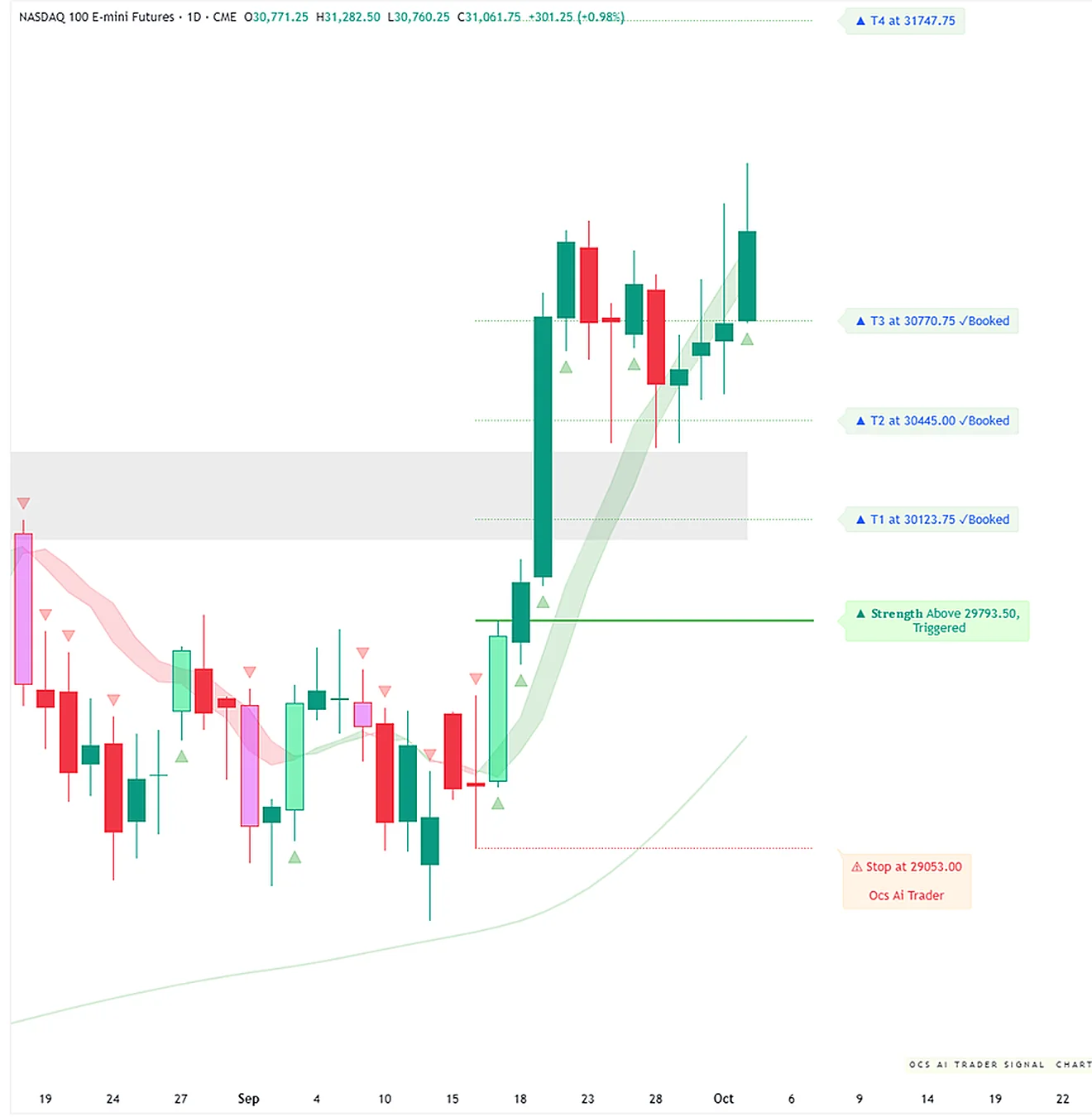
NQ (Nasdaq 100 Futures)
- Thesis: High sensitivity to the carry trade. Any tightening of Japanese financial conditions will disproportionately impact the NQ.
- Risk: The "Volatility Paradox" suggests that the longer the BoJ waits, the more violent the eventual correction in tech stocks will be.
- Levels to Watch: Previous lows around the 20,000-20,200 area (if breached, look for accelerated liquidation).
ES (S&P 500 Futures)
- Thesis: The ES is currently acting as a proxy for global liquidity. The 0.50% decline today reflects the market’s unease with the looming liquidity drain.
- Levels to Watch: 69.00 (Current support), 71.50 (Resistance).
NVDA
- Thesis: The semiconductor sector is the "canary in the coal mine" for liquidity. The 4.27% drop today is indicative of institutional selling pressure related to margin calls.
- Risk: Continued weakness if the Yen strengthens.
- Levels to Watch: 170.00 (Key support). A break below this level would signal a significant technical breakdown.
TLT
- Thesis: Acting as a hedge, but with risks. If Japanese repatriation accelerates, we may see yields rise (prices fall) even in a risk-off environment, as Japanese buyers exit the US Treasury market.
Historical Parallels
The current situation bears a striking resemblance to the "carry-trade unwind" episodes of 2007 and late 2022. In both cases, the trigger was a shift in BoJ policy expectations that caught a crowded market offside. The 2007 episode, in particular, saw a massive, rapid liquidation of high-beta assets as the Yen strengthened, leading to a temporary but sharp spike in global volatility. The key difference today is the role of AI-driven semiconductor stocks, which have essentially become a high-beta proxy for global liquidity, making the potential for a "double-squeeze" significantly higher than in previous cycles.
Outlook & Risk Matrix
Short-Term (1-5 Days)
- Scenario: Sideways consolidation in USDJPY as the market awaits the BoJ Summary of Opinions.
- Volatility: Elevated. Expect "whipsaw" price action as traders react to every headline from Tokyo.
- Key Risk: A hawkish leak or statement from a BoJ official would trigger an immediate, high-impact move across all asset classes.
Medium-Term (1-4 Weeks)
- Scenario: Increased risk of a liquidity-driven correction. The "Volatility Paradox" suggests that the market is underpricing the risk of a disorderly carry-trade unwind.
- Outlook: Defensive. Investors should favor non-correlated assets like Gold (GLD) and reduce exposure to high-beta tech (NVDA, TSM) and small-caps (RTY) that are sensitive to domestic liquidity.
What to Watch
- BoJ Summary of Opinions: This is the primary catalyst. Any hint of a December hike will trigger a violent repricing of global risk.
- USDJPY 150.00 Level: A sustained break above or below this level will dictate the flow of the next 48 hours.
- FII Flows into EM: Monitor capital flows into India (NIFTY) and other EM markets. If these flows reverse sharply, it is the clearest signal that the Yen-funded carry trade is unwinding.
- Semiconductor Volatility: Keep a close eye on the SMH ETF. If it begins to lead the market lower, it confirms that the liquidity drain is the dominant macro theme.
We remain in a period where technical levels are secondary to the underlying liquidity mechanics dictated by the BoJ. The market is not trading on fundamentals right now; it is trading on the availability of cheap Yen. Watch the carry trade, and you watch the market.
Education and market research only, not financial advice. Charts are OCS AI Trader readings at the time of writing and change with new bars.