Across Protocol Breach and the Liquidity Trap: Crypto’s Fragile Macro Pivot
Executive summary
The crypto ecosystem is currently navigating a high-stakes liquidity contraction, catalyzed by a security incident at the Across Protocol. While the immediate impact is a localized drain of cross-chain liquidity and a flight-to-safety, the broader market is being squeezed by a more systemic force: a hawkish repricing of Federal Reserve rate expectations. This convergence—a "bridge-lock" liquidity vacuum meeting a macro-driven capital flight—is accelerating a structural rotation away from decentralized, high-beta yield strategies and toward regulated, institutional-grade infrastructure. We are witnessing the end of the "general purpose" DeFi era, replaced by a defensive pivot where capital is seeking refuge in centralized, regulated proxies like Coinbase, even as those assets face their own regulatory and volatility headwinds.
The Layered Impact Chain
Layer 1: Direct Impacts (The Trigger)
The security breach at Across Protocol has triggered an immediate liquidity drain across the Ethereum ecosystem. The mechanism is straightforward: security incidents involving cross-chain bridges create a "trust-deficit" that forces rapid capital withdrawals. As users rush to exit DeFi protocols to mitigate smart-contract risk, the resulting sell pressure on ETH and related collateral assets creates an immediate, localized volatility spike. Simultaneously, the announcement of the $270M "Project Faro" stablecoin venture by major global banks (Goldman Sachs, Citigroup, BBVA) provides a stark contrast, highlighting the institutional preference for regulated, on-chain settlement over decentralized alternatives.
Layer 2: Secondary Effects (The Contagion)
This localized breach is propagating through the crypto-equity landscape. Publicly traded proxies like COIN and MSTR are witnessing an increase in risk premiums. The secondary effect here is a "deleveraging cascade." As bridge-locked collateral is liquidated, DeFi protocols are forced to unwind positions, leading to a broader sell-off in primary assets like BTC and SOL. This is not merely a reaction to the hack; it is a forced liquidation event. Institutional investors, sensitive to operational risk, are rotating out of these crypto-linked equities, leading to a contraction in valuation multiples. We are seeing a distinct shift in capital allocation: liquidity is fleeing decentralized, unverified protocols and migrating toward centralized, regulated exchange liquidity (e.g., BNBUSD, COIN), creating a "flight-to-quality" within the crypto asset class itself.
Layer 3: Macro Propagation (The Systemic Squeeze)
The crypto-specific volatility is colliding with a macro-driven "Real Yield Trap." Hot October inflation data has forced the market to price in a higher probability of a 50bps Fed rate hike. This is draining global liquidity, strengthening the DXY, and increasing the cost of capital for speculative assets. The spillover into retail-driven tech sentiment (QQQ, NQ) is palpable. High-beta tech and AI-semiconductors, which have been priced on liquidity-driven growth, are now facing margin-call-driven liquidation pressure as crypto-liquidity risk spills over into broader equity indices. The "digital gold" narrative is failing to hold, as capital flees to traditional dollar-denominated safe havens (GLD, UUP) rather than rotating into BTC.
Layer 4: Non-Obvious Cross-Connections (The Bridge-to-Fiat Trap)
The most critical, non-obvious development is the "Bridge-to-Fiat" liquidity trap. As liquidity drains from decentralized bridges (L1), capital is forced into centralized exchanges. This creates a temporary, paradoxical surge in volume and fee revenue for platforms like Coinbase (COIN), which acts as a "safe harbor." However, this creates a decoupling: COIN may outperform the broader crypto-asset drawdown initially, but it remains tethered to the regulatory overhang that impacts all crypto-proxies. Furthermore, the "Fed Policy Blindspot" is emerging: if the crypto-liquidity drain leads to a rapid, disorderly unwinding of leveraged positions, the resulting market volatility may force a shift in Fed forward guidance—a "Fed Put" expectation that could temporarily support ES/NQ, even as the underlying crypto assets remain under pressure.
Unified OCS Chart Read
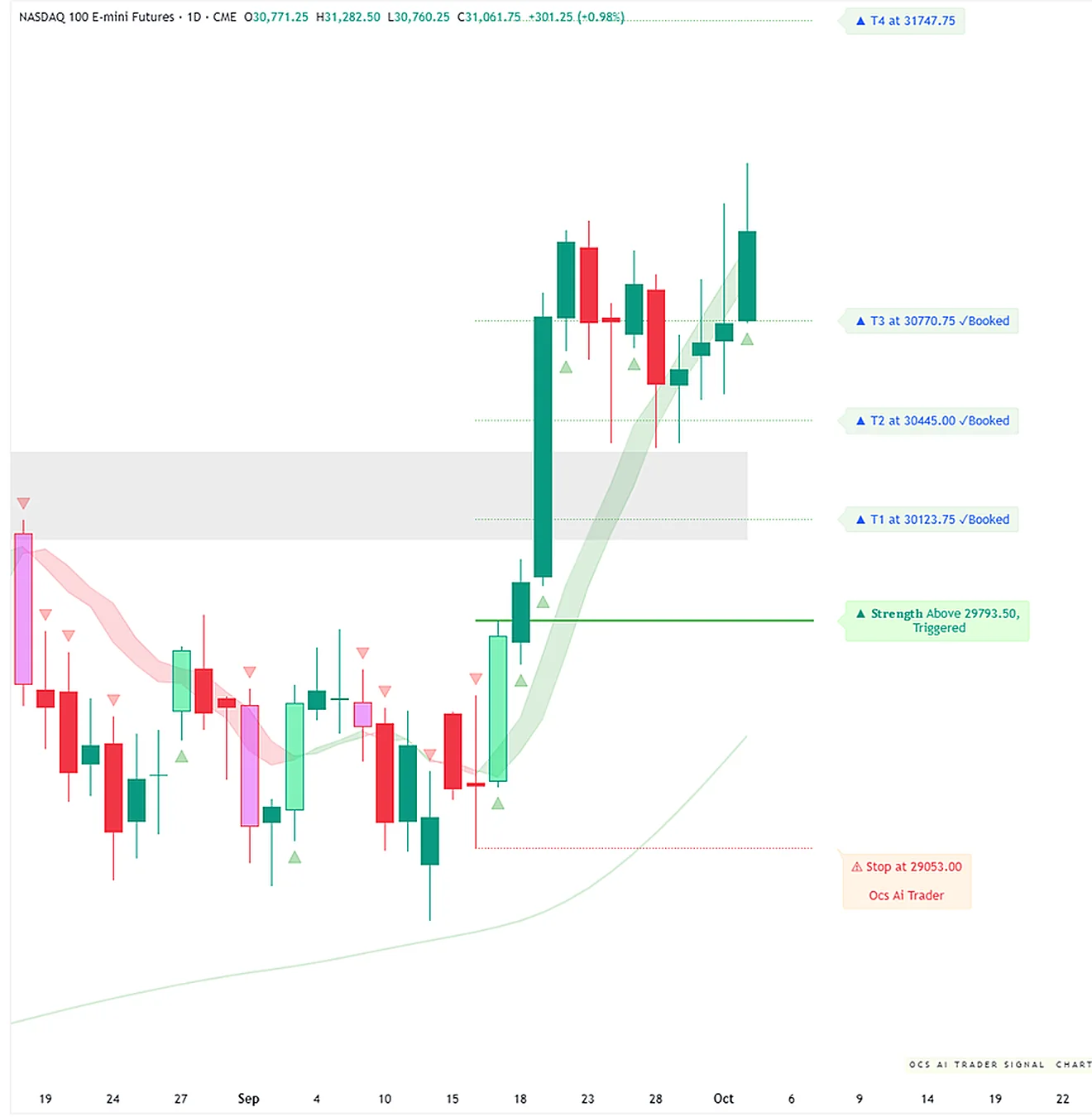
Note: OCS chart capture for ETH, COIN, BTC, SOL, and QQQ is currently deferred to the asynchronous repair queue. No specific signal levels are available for this report. The following analysis is based on fundamental liquidity drivers and technical indicators provided in the market data.
- Setup Read: The market is currently in a defensive, risk-off posture. Technical indicators for ETH (RSI 32.46) and COIN (RSI 33.12) suggest oversold conditions on a 3-month daily basis, but in a liquidity-constrained environment, oversold conditions can persist.
- Levels to Watch: Given the lack of active OCS chart data, focus on the psychological support levels identified in the market data: ETH at the $19.09 range and COIN at the $129.41 range.
- Invalidation: A reversal of the current liquidity drain would require a stabilization in bridge-risk sentiment and a cooling of the 50bps Fed hike expectations.
- Risk Notes: The current volatility is driven by a liquidity vacuum, not just sentiment. Chart-informed setups are currently high-risk due to the potential for rapid, order-flow-driven moves.
Security-by-Security Analysis
ETH (Ethereum)
- Snapshot: Price $19.62 (-3.21%).
- Analysis: ETH is the epicenter of the current liquidity drain. The Across Protocol breach has directly impacted the Ethereum ecosystem's liquidity, leading to a contraction in yield-farming activity. With an RSI of 32.46, the asset is approaching oversold territory, but the "bridge-lock" risk remains a significant overhang. The 20-day SMA ($22.22) acts as a primary resistance level.
- Risk: High. The correlation between bridge-liquidity and base-layer price action is currently at a peak.
COIN (Coinbase)
- Snapshot: Price $132.13 (-2.92%).
- Analysis: COIN is caught in the "Bridge-to-Fiat" liquidity trap. While it benefits from the flight-to-quality as capital moves from DeFi to centralized exchanges, it is simultaneously being repriced due to increased regulatory scrutiny and a higher cost of capital. Options activity shows heavy volume in the $130-$132 range, suggesting a consolidation zone.
- Risk: Medium-High. The stock is sensitive to both crypto-market volatility and broader tech-sector sentiment (QQQ).
BTC (Bitcoin)
- Snapshot: Price $32.58 (-1.42%).
- Analysis: BTC is holding up better than ETH, reinforcing its role as a macro-anchor, yet it is not immune to the liquidity drain. The "digital gold" narrative is currently underperforming against actual gold (GLD) as investors seek refuge in traditional assets. The 20-day SMA ($35.16) is a key level to watch for a potential trend reversal.
- Risk: Medium. BTC remains the primary liquidity proxy for the entire asset class.
QQQ (Nasdaq 100)
- Snapshot: Price $674.76 (-0.68%).
- Analysis: The spillover from crypto-liquidity risk into retail-driven tech sentiment is evident. The high correlation between crypto-liquidity and tech-heavy indices means that any further unwinding of leveraged crypto positions will likely manifest as selling pressure in growth-oriented tech stocks.
- Risk: Medium. The index is currently testing support levels; a break below the 20-day SMA ($700.86) would signal a deeper correction.
Historical Parallels
This environment bears striking similarities to the mid-2022 liquidity crunch (post-Terra/Luna), where idiosyncratic protocol failures (bridge hacks, stablecoin de-pegs) catalyzed a broader macro-driven deleveraging. The key difference today is the institutional involvement. In 2022, the ecosystem was largely retail-driven; today, with the entry of Project Faro-like initiatives and institutional-grade tokenization (NYSE-Avalanche integration), the market has more "structural" participants. However, this means that when liquidity drains, the impact is felt more acutely in traditional financial proxies and equities, rather than being contained within the crypto-native "walled garden."
Outlook & Risk Matrix
Short-Term (1-5 Days): Volatility & Contagion
We expect continued volatility as the market digests the Across Protocol incident. The primary risk is a "liquidity vacuum" where the lack of bridge-liquidity forces further, indiscriminate selling of ETH and SOL to cover margin requirements. Watch for signs of "capitulation" volume, which would indicate a short-term bottom.
Medium-Term (1-4 Weeks): Structural Rotation
The market will likely bifurcate. We anticipate a continued rotation of capital away from "general purpose" DeFi and into regulated, institutional-grade on-chain infrastructure. Assets that can demonstrate regulatory compliance and institutional integration (e.g., those aligning with the Project Faro or NYSE-Avalanche models) may begin to decouple from the broader crypto-asset drawdown.
Risk Matrix
- Bull Case: Fed forward guidance softens, alleviating the liquidity drain; bridge-risk sentiment stabilizes.
- Base Case: Continued liquidity contraction, with crypto-proxies (COIN, MSTR) underperforming the broader market as they face both crypto-volatility and macro-tightening.
- Bear Case: A "Bridge-Lock" liquidity vacuum becomes systemic, triggering a broader margin-call cascade that forces liquidation in long-duration assets (TLT) and high-beta tech (QQQ).
What to Watch
- Stablecoin Flows: Monitor the migration of capital between decentralized protocols and centralized exchanges (BNBUSD, COIN).
- Fed Forward Guidance: Watch for any changes in rhetoric regarding the 50bps hike probability; this is the primary macro driver.
- Bridge Liquidity: Track the recovery (or lack thereof) of liquidity in the Across Protocol and other major cross-chain bridges.
- Institutional Proxy Performance: Observe whether COIN and MSTR begin to trade independently of the broader crypto-market, signaling a successful "safe harbor" narrative.
Education and market research only, not financial advice. Charts are OCS AI Trader readings at the time of writing and change with new bars.