The Institutionalization Pivot: Deutsche Bank, Regulatory Shifts, and the Great Liquidity Migration
Executive summary
The digital asset landscape is undergoing a structural transformation as of November 12, 2026. The launch of Deutsche Bank’s regulated institutional custody service in Europe marks a critical inflection point, signaling that the "crypto-native" era of bespoke, high-risk custody is being supplanted by Tier-1 banking infrastructure. This shift is catalyzing a massive migration of institutional capital from specialized crypto-brokerages toward regulated ETF vehicles (IBIT, ETHE) and traditional banking channels. Simultaneously, the US Congressional election results—favoring pro-crypto candidates—are reducing legislative tail risk, while Bitcoin miners’ pivot to AI infrastructure creates an unexpected supply-side squeeze. We are witnessing a "flight to quality" that is re-rating the entire crypto-financial ecosystem: while crypto-native proxies like Coinbase (COIN) face institutional market share erosion, traditional financial institutions (XLF) are emerging as the new, albeit unlikely, custodians of digital asset alpha.
Layer 1: The Institutionalization Catalyst (Direct Impacts)
The primary driver today is the official launch of Deutsche Bank’s digital asset custody service. This is not merely a product launch; it is the legitimization of the asset class by a global systemic player. By providing a regulated bridge for institutional and corporate clients, Deutsche Bank is effectively lowering the counterparty risk premium that has historically deterred large-scale capital allocators.
Simultaneously, the sector is reeling from the potential sale of Nomura’s Laser Digital unit. This exit highlights a broader "retrenchment" of legacy financial institutions from specialized, loss-making crypto subsidiaries. While this may look like a retreat, it is actually a consolidation: capital is moving from these fragile, niche entities into the robust, regulated frameworks offered by Tier-1 banks.
Furthermore, the US Congressional shifts toward a more favorable regulatory environment are removing the "legislative discount" that has plagued BTC and ETH valuations. This, combined with Bitcoin miners’ transition to AI data centers, is creating a double-edged sword for supply: mining operations are becoming diversified cash-flow generators rather than forced sellers of BTC, effectively tightening the circulating supply of the asset.
Layer 2: The Great Custody Migration (Secondary Effects)
The direct impacts are triggering a rapid sector rotation. We are observing a distinct "flight to quality." Institutional capital is rotating out of speculative, crypto-native financial firms and into regulated, liquid ETF structures like IBIT and ETHE.
The competitive dynamic is shifting: the fee-based moats of crypto-native exchanges are under threat. As institutional investors prioritize tax-efficient, highly liquid ETF vehicles over direct prime brokerage relationships, liquidity is concentrating in the US-listed ETF complex. This is creating a "custody contagion" risk for crypto-native firms, which now face the dual challenge of losing market share to Tier-1 banks while simultaneously dealing with higher regulatory scrutiny as they pivot to retail-focused, higher-margin (and higher-risk) products to compensate for the lost institutional volume.
Layer 3: Macro Propagation (Liquidity & Correlation)
The macro implications of this shift are profound. The migration of liquidity from crypto-native venues to Tier-1 banking custody is compressing bid-ask spreads for major digital assets (BTC, ETH), making them more attractive for large-ticket institutional orders.
We are also seeing a potential break in the long-standing correlation between BTC and the Nasdaq (NQ). As BTC moves from a "high-beta tech proxy" to a "regulated institutional asset," its microstructure is evolving. If BTC begins to trade more like a safe-haven asset (similar to gold), its sensitivity to US 2Y yield volatility may decouple from the broader risk-on equity complex.
Furthermore, the reduction of systemic tail risk in European digital asset markets—driven by the divestment of non-core crypto units by legacy banks—is lowering the risk premium for crypto-linked assets in the Eurozone. This creates a more stable regulatory environment, potentially attracting a new wave of European institutional capital that was previously sidelined by compliance concerns.
Layer 4: Non-Obvious Connections & Hidden Risks
The most compelling, non-obvious connection is the "Custodian-as-Alpha" trade. As institutional liquidity migrates to Tier-1 banks like Deutsche Bank, the fee-capture for custody services becomes a significant revenue stream for these institutions. This effectively makes the financial sector (XLF) a proxy for crypto market depth. We may see a future where XLF correlates more strongly with crypto volatility than historical models would suggest.
Additionally, we have the "Supply-Side Constraint Paradox." The pivot of Bitcoin miners to AI infrastructure is a dual-shock: it reduces the immediate sell pressure on BTC (as miners hold more of their production) while simultaneously increasing demand for hardware (NVDA/SMH). This creates a self-reinforcing cycle where BTC price appreciation funds the hardware expansion, which in turn tightens BTC supply, potentially setting the stage for a "melt-up" scenario that is fundamentally supported by both AI-driven demand and crypto-native supply constraints.
Finally, we must consider the "Tail Risk: The Custody Contagion Trap." While Tier-1 custody reduces counterparty risk, it centralizes systemic risk. If a major bank like Deutsche Bank were to face a balance sheet crisis, the concentration of institutional crypto-liquidity within their custody infrastructure could lead to a "flash-freeze" of assets, a scenario far more devastating than the decentralized failures of the past.
Unified OCS Chart Read
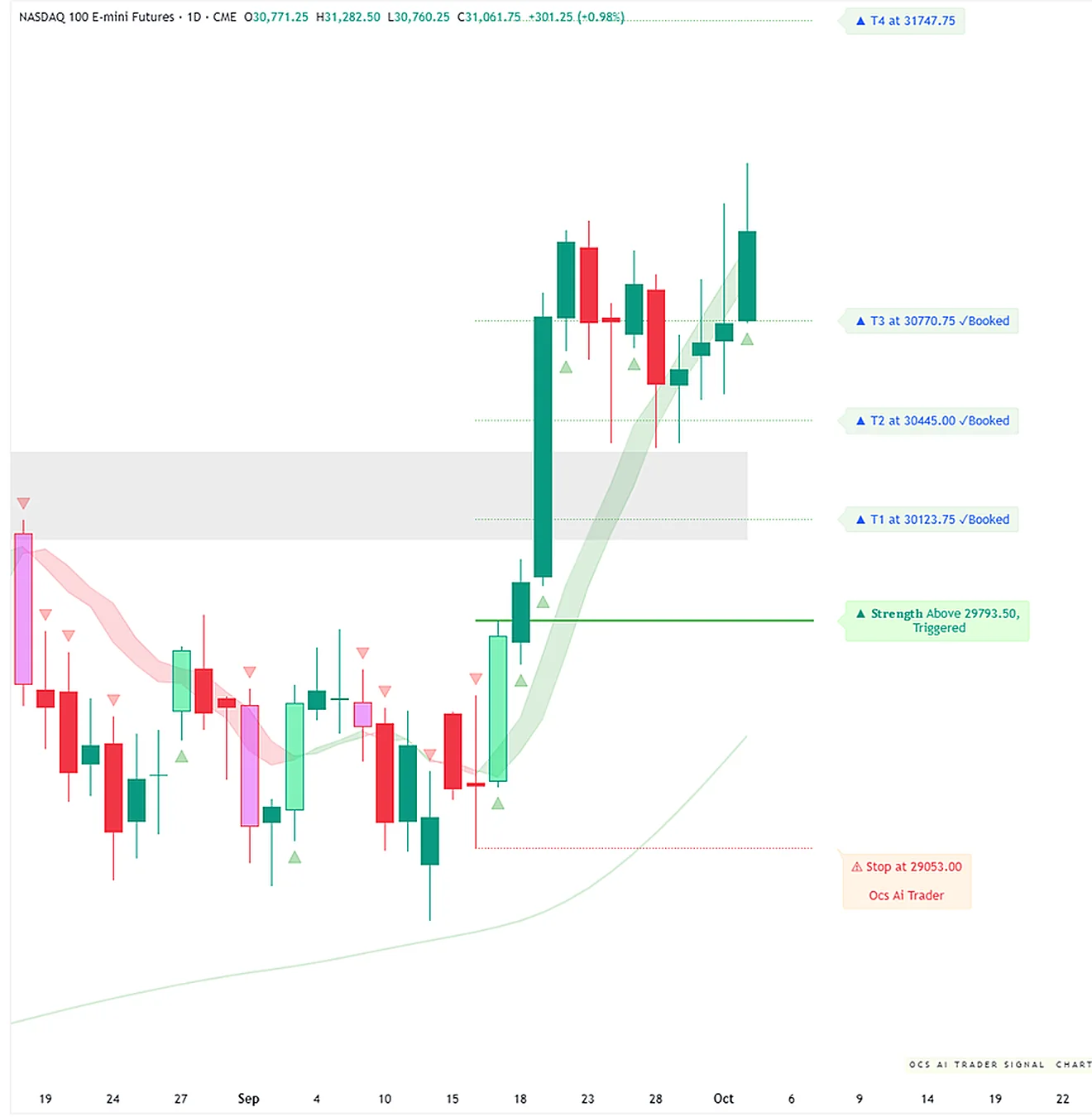
Chart capture for BTC, COIN, and IBIT is currently deferred to the asynchronous repair queue. As such, we cannot provide an OCS Signal Engine reading at this time. We are monitoring the liquidity and delta indicators closely. The current market snapshot suggests a period of consolidation, but the structural shift described above is the primary driver of the medium-term trend. We will provide updated levels and signal reconciliations once the OCS chart evidence is reconciled.
Security-by-Security Analysis
BTC (Bitcoin)
- Snapshot: Price $32.97 (+1.20%).
- Analysis: BTC is benefiting from the "Institutionalization" narrative. The pivot of miners to AI is a long-term bullish structural shift.
- Risk: The concentration of custody in Tier-1 banks introduces a new, centralized systemic risk.
- Levels to Watch: $33.01 (Resistance), $32.38 (Support).
COIN (Coinbase)
- Snapshot: Price $136.27 (+3.13%).
- Analysis: COIN is in a difficult position. It is losing institutional market share to Tier-1 banks but remains the primary retail gateway. The "Regulatory Arbitrage" feedback loop suggests COIN will be forced to pivot to higher-risk retail products to maintain margins, which will keep regulatory scrutiny high.
- Risk: Continued institutional erosion.
- Levels to Watch: $138.86 (Resistance), $132.87 (Support).
IBIT (iShares Bitcoin Trust)
- Snapshot: Price $42.24 (+1.34%).
- Analysis: IBIT is the primary beneficiary of the "flight to quality." As institutional investors move away from prime brokerage, IBIT is becoming the default vehicle for BTC exposure.
- Levels to Watch: $42.28 (Resistance), $41.45 (Support).
ETHE (Grayscale Ethereum Trust)
- Snapshot: Price $16.65 (+1.09%).
- Analysis: Similar to IBIT, ETHE is seeing increased reliance as a regulated structure for ETH exposure. The institutionalization of custody is a net positive for the trust's liquidity depth.
- Levels to Watch: $16.82 (Resistance), $16.34 (Support).
Historical Parallels
The current institutional entry by Deutsche Bank mirrors the 2023-2024 wave of institutional adoption, where the introduction of spot ETFs fundamentally changed the market microstructure. However, today’s environment is distinct because the "crypto-native" infrastructure (like Nomura’s Laser Digital) is being replaced rather than augmented. This is a maturation phase similar to the early 2000s in the equity markets, where specialized electronic trading firms were absorbed by larger, more regulated financial institutions.
Outlook & Risk Matrix
Short-Term (1-5 Days)
- Scenario (Bullish): Continued inflow into IBIT/ETHE as institutional rebalancing occurs.
- Scenario (Bearish): Regulatory noise surrounding the Congressional shifts or a broader market sell-off triggered by the "Custody Contagion" fears.
- Key Levels: BTC $32.38–$33.01.
Medium-Term (1-4 Weeks)
- Scenario (Bullish): The "Supply-Side Constraint Paradox" takes hold as mining hash rate shifts further toward AI; BTC supply squeeze tightens.
- Scenario (Bearish): COIN faces margin compression as institutional volume drops; potential for a broader crypto-native sector re-rating.
- Key Levels: Watch for the correlation break between BTC and NQ.
What to Watch
- Institutional Custody Flows: Monitor reports on the growth of Deutsche Bank’s digital asset AUM.
- Miner Hash Rate Shifts: Track the percentage of mining power pivoting to AI infrastructure.
- COIN Earnings/Regulatory News: Watch for any sign of a pivot to higher-risk retail products.
- XLF Correlation: Monitor the correlation between XLF and BTC volatility as a proxy for the "Custodian-as-Alpha" trade.
- Congressional Appointments: Watch for specific pro-crypto appointments to key financial committees.
Education and market research only, not financial advice. Charts are OCS AI Trader readings at the time of writing and change with new bars.