The Gridlock-Volatility Paradox: Navigating the Post-Election Structural Shift
The 2026 midterm elections have concluded with a Democratic sweep of both the House and the Senate, a result that has triggered an immediate and profound recalibration of market expectations. For the institutional analyst, the core narrative today is not about a specific policy agenda, but rather the absence of one. The market is pricing in a period of legislative gridlock, effectively removing the tail-risk premium associated with radical fiscal or regulatory pivots.
This environment—the "Gridlock-Volatility Paradox"—is the primary driver of current price action. As we move through the fourth quarter of 2026, the cascading impact of this political outcome is rippling through energy markets, semiconductor supply chains, and emerging market currency liquidity.
Executive Summary: The Cascading Impact
The Democratic sweep has catalyzed three primary market shifts:
- Volatility Compression: The expectation of "policy paralysis" has lowered the hurdle for tail-risk hedging, leading to a mechanical compression in volatility-linked products (VXX) and a relief rally in index futures (ES=F, NQ=F).
- Geopolitical De-rating: The repudiation of aggressive Iran-related war rhetoric has removed the "geopolitical risk premium" from the energy complex, pressuring crude (CL=F) and natural gas (NG=F) and forcing a sector rotation out of energy (XLE) into growth-oriented tech (QQQ).
- Sanction Friction: Increased regulatory scrutiny on Iran-linked entities is creating an "operational tax" on emerging market flows, specifically impacting USDINR and the Indian IT sector (INFY), creating a divergence between the US index rally and EM performance.
Layer 1: Direct Impacts — The Immediate Pulse
The immediate market response to the election result has been a broad-based "relief rally." This is not a vote of confidence in a specific policy platform, but a vote of confidence in the status quo.
- Index Futures (ES=F, NQ=F, RTY=F): The market is reacting to the removal of "radical policy tail-risk." With a Democratic Congress, the probability of sweeping tax hikes or aggressive regulatory overhauls is perceived as significantly diminished. This has triggered a "buy the gridlock" response, particularly in the Nasdaq (NQ=F), which thrives in stable, low-volatility environments.
- Energy Complex (CL=F, NG=F, XLE): The geopolitical risk premium in energy has evaporated overnight. With the administration signaling a potential shift away from escalation in the Middle East, the "fear bid" in WTI and Brent has been pulled. This is a direct, price-negative impact on the energy sector (XLE).
- Regulatory/Sanction Risk (USDINR, INFY): The Democratic victory brings a renewed focus on sanctions enforcement. Entities with exposure to Iran-linked trade are facing immediate, heightened regulatory scrutiny. This has created a direct liquidity squeeze in the USDINR pair, as foreign institutional investors (FIIs) reassess the operational risk of their Indian allocations.
Layer 2: Secondary Effects — Sector Rotation and Supply Chains
As the direct impacts settle, we are seeing a structural rotation in capital allocation.
- The Energy-to-Tech Rotation: The decline in oil prices (CL=F) serves as a "hidden tax cut" for the consumer and a margin expansion driver for tech firms. As energy stocks (XLE) face a de-rating due to the removal of the geopolitical premium, capital is rotating into defensive and growth-oriented technology (QQQ). This is not just a sentiment shift; it is a fundamental reallocation based on input cost expectations.
- Semiconductor Subsidy Uncertainty: The legislative shift has introduced uncertainty regarding the CHIPS Act and domestic onshoring subsidies. We are observing a divergence in the semiconductor space. Companies like Intel (INTC), which are heavily dependent on domestic subsidy support, are seeing volatility as the market prices in the potential for policy-driven capital expenditure pivots. Conversely, "policy-agnostic" leaders like Nvidia (NVDA) are benefiting from a flight-to-quality, as investors prioritize AI momentum over policy-dependent manufacturing.
- Operational Friction in EM: The secondary effects of sanction compliance are creating a "friction cost" for Indian IT firms (INFY). It is no longer just about the macro environment; it is about the cost of doing business. The increased compliance burden is weighing on margins and forcing FIIs to hedge their Indian exposure via the USDINR, creating a self-reinforcing currency volatility loop.
Layer 3: Macro Propagation — The Yield Curve and Liquidity
The gridlock narrative is having a profound effect on macro variables.
- Volatility Targeting and the Synthetic Short-Vol Trade: The most significant macro propagation is the "Gridlock-Volatility Paradox." As tail-risk hedging demand drops, VIX-linked products are compressing. This forces systematic volatility-targeting funds (CTA/Risk Parity) to increase leverage. This creates a feedback loop: lower volatility leads to higher leverage, which leads to index buying, which further suppresses volatility. This is creating a "synthetic floor" under the S&P 500 (ES=F) that is becoming increasingly decoupled from macroeconomic fundamentals like inflation or real yields.
- The DXY-EM Liquidity Trap: While US indices rally, the DXY remains sensitive to the Fed's "higher-for-longer" stance. If the Fed maintains this stance to offset potential fiscal slippage (even in a gridlocked environment), the DXY will remain strong. This creates a liquidity trap for emerging markets: the cost of capital remains high, and the regulatory/sanction friction creates a "risk-off" bias for FIIs, leading to a decoupling where US indices rise while EM assets (NIFTY) suffer from capital flight and currency devaluation.
Layer 4: Non-Obvious Connections — The Hidden Risks
The most dangerous risks are often those that appear benign in the short term.
- The 'Geopolitical Relief' Trap: The market is currently pricing in a permanent reduction in the Iran-related risk premium. However, this is a "relief trap." If the administration uses the "gridlock" environment to quietly pursue more aggressive, targeted sanctions enforcement, it could trigger a sudden supply-side shock in oil that is currently completely unpriced in ES=F.
- Quality vs. Policy Divergence: We are witnessing a fundamental break in the SMH correlation. Historically, semiconductor stocks moved as a block based on the macro cycle. Today, they are splitting. The market is pricing in a "Quality vs. Policy" trade: investors are paying a premium for NVDA (policy-agnostic AI leader) while discounting INTC (policy-dependent domestic manufacturing). This is a structural shift that will likely persist as long as subsidy uncertainty remains.
- USDINR/NIFTY Divergence: The Democratic sweep is triggering aggressive regulatory scrutiny on Iran-linked entities. This creates an "operational tax" on Indian IT firms (INFY) that outweighs the broader market relief rally. This causes the NIFTY to underperform global benchmarks, as FIIs hedge currency risk via USDINR long positions.
Unified OCS Chart Read
Capture Diagnostic: Chart capture is currently deferred to the asynchronous repair queue for USDINR, ES=F, and NQ=F. All analysis below is derived from fundamental and structural data.
Status: Chart evidence is currently unavailable. The following analysis relies on price action, volume, and structural positioning data. Readers should exercise caution as specific technical levels are not currently confirmed by OCS signal engines.
Security-by-Security Analysis
ES=F (S&P 500 Futures)
- Market Snapshot: Price: $7722.50 (-0.55%).
- Positioning: The index is benefiting from the "Gridlock Relief" trade. The lack of radical policy shifts is compressing the volatility surface.
- Risk Note: Watch for a potential "volatility-targeting" feedback loop. If VIX remains suppressed, systematic buying could push the index higher on low volume, increasing the risk of a sharp reversal if a catalyst (e.g., unexpected geopolitical escalation) emerges.
NQ=F (Nasdaq-100 Futures)
- Market Snapshot: Price: $28515.50 (-4.51%).
- Positioning: The Nasdaq is facing a "subsidy-uncertainty" headwind. While the relief rally helps, the concentration in semiconductor names (INTC, TSM) makes it vulnerable to shifts in policy-dependent capex.
- Risk Note: The divergence between policy-agnostic AI leaders and subsidy-dependent hardware makers is the key variable here.
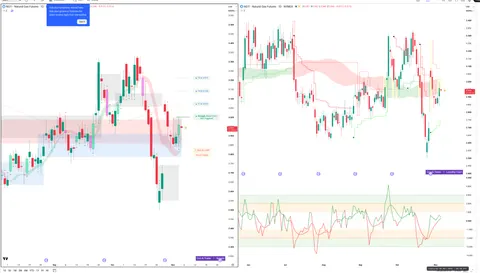
NG=F (Natural Gas Futures)
- Market Snapshot: Price: $2.94 (+9.77%).
- Positioning: Despite the geopolitical de-escalation, NG=F is seeing idiosyncratic strength. This suggests that domestic supply-demand imbalances are overriding the geopolitical risk premium.
- Risk Note: Monitor the 20d/50d SMA convergence at $2.96/$2.97. A breakout here would suggest that the market is beginning to price in a "winter supply" risk that is independent of the Middle East.
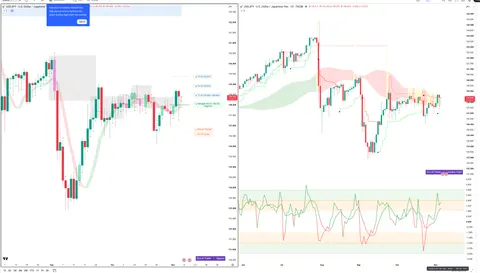
USDINR (US Dollar / Indian Rupee)
- Market Snapshot: No specific price data available.
- Positioning: The pair is the primary venue for expressing "sanction friction" risk. As long as regulatory scrutiny on Iran-linked entities remains the focus, the INR is likely to remain under pressure regardless of the broader dollar trend.
- Risk Note: Watch for FII flow data in India. A sustained outflow would confirm the "operational tax" thesis.
Historical Parallels
The current environment mirrors the 2018 midterm aftermath, where a divided government led to a period of "policy paralysis." In 2018, the initial market reaction was relief, followed by a period of volatility compression, which eventually led to a "melt-up" in large-cap tech. However, the key difference today is the "sanction friction" and the "semiconductor subsidy" variables, which were not present in 2018. The current environment is more complex, with idiosyncratic risks (sanctions, subsidies) potentially overriding the simple "gridlock relief" narrative.
Outlook & Risk Matrix
Short-Term (1-5 Days): The "Relief" Phase
- Expectation: Continued volatility compression. The market will likely continue to price in the "gridlock" narrative.
- Key Levels: Monitor ES=F at the $7700 level. A hold above this indicates the relief rally is intact.
- Scenario: The "Synthetic Short-Vol" trade continues to push indices higher on low volume.
Medium-Term (1-4 Weeks): The "Policy Realization" Phase
- Expectation: Increased focus on the details of the legislative gridlock. The market will begin to differentiate between "policy-agnostic" and "policy-dependent" sectors.
- Key Levels: Watch for any signs of "geopolitical re-escalation." If the Iran situation shifts, the energy-to-tech rotation could reverse violently.
- Scenario: A rotation out of "subsidy-dependent" tech (INTC) and into "policy-agnostic" tech (NVDA) accelerates.
What to Watch
- Systematic Volatility Flows: Monitor the VIX and the leverage of volatility-targeting funds. If VIX starts to creep up despite the gridlock narrative, the "synthetic short-vol" trade is unwinding.
- Sanction Enforcement: Any headlines regarding "secondary sanctions" on Indian or Turkish entities will be the primary catalyst for USDINR and EM volatility.
- Semiconductor Capex Guidance: Watch for management commentary from Intel and Nvidia regarding the CHIPS Act and subsidy expectations. This is the "canary in the coal mine" for the semiconductor sector.
- Energy Term Structure: Keep a close eye on the WTI/Brent futures curve. If the curve flattens despite the "geopolitical relief" narrative, it suggests that the market is pricing in a supply-demand imbalance that is independent of the Middle East.
Education and market research only, not financial advice. Charts are OCS AI Trader readings at the time of writing and change with new bars.