The Regulatory-Liquidity Feedback Loop: OKX-ICE and the Great Institutional Migration
Executive summary
The digital asset landscape is currently undergoing a structural transformation, triggered by the intersection of the OKX-Intercontinental Exchange (ICE) tokenized stock launch and a tightening regulatory environment. We are witnessing a "flight to compliance" that is fundamentally altering market architecture. While the launch of tokenized securities tests new SEC exemptions, the immediate market reaction has been one of fragmentation.
Institutional capital is aggressively rotating out of offshore, crypto-native liquidity pools and into US-domiciled, SEC-regulated vehicles like IBIT and FBTC. This migration is not merely a preference; it is a mandate. Simultaneously, the "stranded asset" trap—where Bitcoin miners who pivoted to AI infrastructure face regulatory moratoriums on data center expansion—is forcing a supply-side shock as these entities liquidate BTC holdings to cover operational costs. This convergence of regulatory friction and forced corporate deleveraging is creating a unique liquidity squeeze, decoupling Bitcoin from traditional risk-on equity rallies and strengthening the DXY as a safe-haven proxy in the face of persistent inflation.
The Cascading Impact Analysis: Layer by Layer
Layer 1: Direct Impacts — The Friction of Innovation
The immediate catalyst is the OKX-ICE tokenized stock launch. By attempting to bridge the gap between traditional equity markets and on-chain settlement, the venture has inadvertently triggered a regulatory stress test. The SEC’s scrutiny of these new exemption pathways has created immediate friction. Investors are wary of holding tokenized equities that may face future compliance challenges, leading to a liquidity drain from these new instruments and a concurrent spike in demand for traditional, regulated ETFs.
Simultaneously, the semiconductor sector is grappling with leadership uncertainty at a major AI chip provider—rumors regarding the ousting of Nvidia’s CEO Jensen Huang have introduced a layer of volatility that ripples directly into the AI-mining pivot narrative.
Layer 2: Secondary Effects — The "Stranded Asset" Trap
The secondary effect is a classic "stranded asset" scenario. Many Bitcoin mining firms, facing margin compression and regulatory hurdles in the crypto space, pivoted heavily into AI data center infrastructure. However, as local voters and regulators push back against the energy and infrastructure demands of these data centers, the capital deployed into these projects is becoming trapped.
Miners are now facing a liquidity crunch. With the cost of capital rising—driven by the broader macro environment and the specific regulatory uncertainty surrounding their business models—these firms are forced to liquidate BTC holdings. This creates a supply-side pressure on BTC that is independent of retail sentiment, effectively acting as a "forced seller" mechanism that dampens the impact of institutional inflows.
Layer 3: Macro Propagation — The Flight to Compliance
The macro implications are profound. We are observing a structural rotation from speculative, offshore crypto-native liquidity into regulated US financial instruments. This is a "flight to compliance." As the DXY strengthens on the back of persistent inflation and hawkish Fed rate expectations, the cost of capital for crypto-leveraged entities (like MicroStrategy and Coinbase) is spiking.
The correlation between BTC and traditional risk assets is breaking down. Instead of acting as a hedge against inflation or a high-beta growth asset, BTC is increasingly behaving as a risk-off asset, sensitive to the same liquidity drains that are pressuring emerging markets. The DXY is the common denominator here; as it drains global liquidity, crypto assets—lacking the regulatory "safety" of Treasuries—are suffering disproportionately.
Layer 4: Non-Obvious Connections — The Feedback Loop
The most critical, non-obvious insight is the "Regulatory-Liquidity Feedback Loop." By forcing capital out of offshore tokenized platforms and into US-domiciled ETFs, the SEC is effectively centralizing crypto liquidity within the US regulatory perimeter.
While this increases the "legitimacy" of the asset class, it paradoxically makes the global crypto market hyper-sensitive to US-specific regulatory shocks. We are also seeing a "Compliance Safe Haven" dynamic: institutional mandates are preventing managers from holding non-regulated digital assets during periods of SEC friction, driving them into gold (GLD) as a traditional, compliant store of value. This creates a triple-pressure environment for emerging markets, which are losing liquidity to the DXY, while the "digital gold" narrative of BTC is being undermined by its own regulatory volatility.
Unified OCS Chart Read
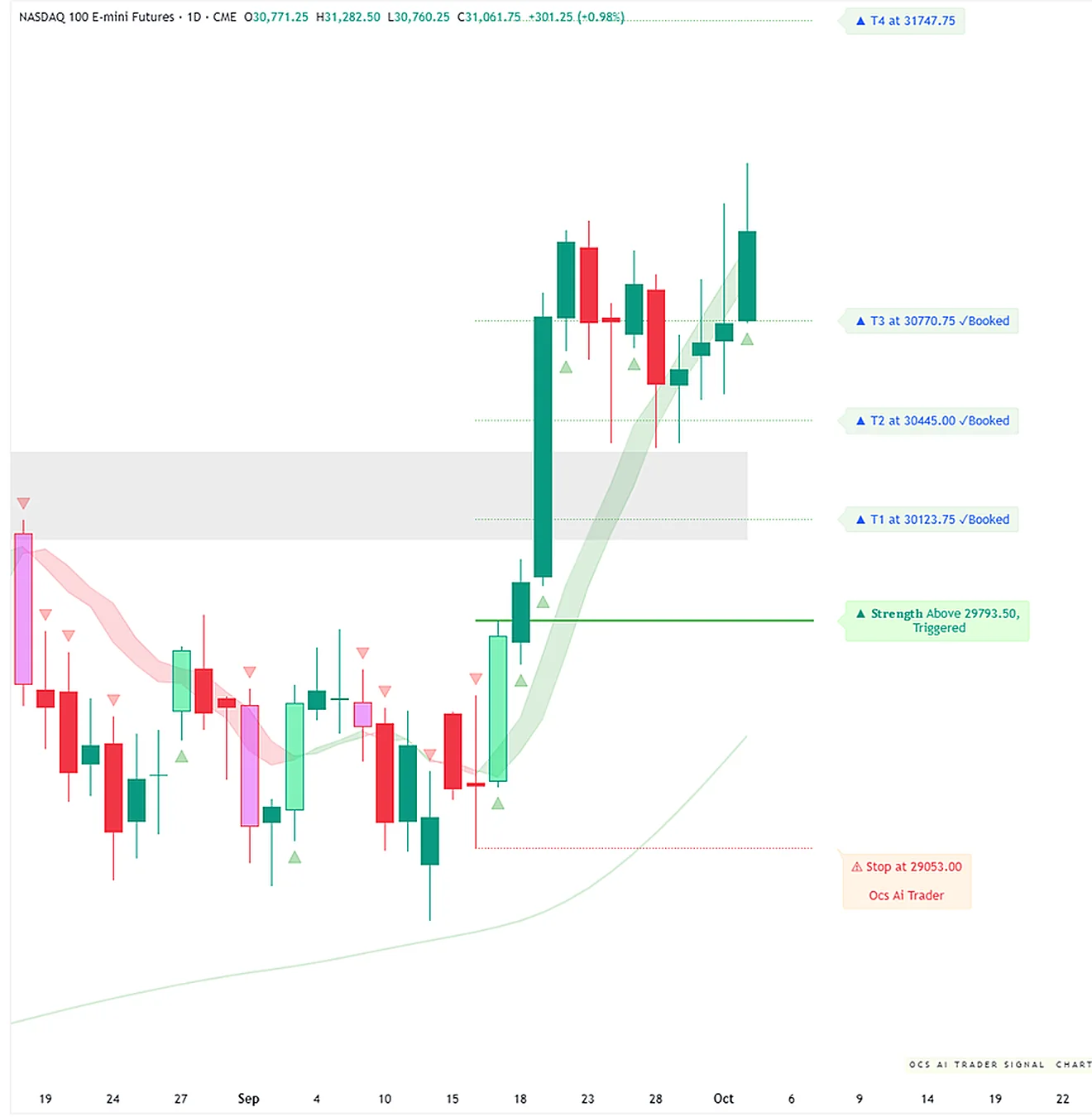
Note: OCS chart evidence for BTC, COIN, and associated instruments is currently pending asynchronous enrichment from our vision systems. No actionable price levels or signal candles are available at this time. The analysis below relies on fundamental and macro-positioning data.
The current setup for the crypto-proxy complex remains in a state of high volatility and low-conviction trading. The lack of clear, sustained support levels suggests that liquidity is being withdrawn rather than rotated, confirming the "flight to compliance" thesis. Investors should treat current price action as a function of forced deleveraging rather than a reflection of underlying asset value.
Security-by-Security Analysis
BTC (Bitcoin)
- Snapshot: Price ~$32.97.
- Analysis: BTC is caught in a supply-side squeeze. The "stranded asset" trap for miners is forcing liquidation, while the broader macro environment (DXY strength) is sapping risk appetite.
- Key Dynamics: Watch the $32.00 support level. A breach here would likely trigger further stops, given the lack of institutional buying to offset the miner-led selling. The decoupling from NQ/ES futures is the primary indicator of this risk-off shift.
COIN (Coinbase)
- Snapshot: Price ~$136.27.
- Analysis: COIN is the primary proxy for the regulatory friction we are tracking. As the "custodian-as-alpha" trade faces competition from traditional banking entities and regulatory pressure, the fee-based moat is under siege.
- Key Dynamics: Options activity shows significant put volume at the $120-$125 range for the near term, suggesting market participants are hedging against further regulatory-induced downside. The stock is currently trading at the lower end of its recent range; any further headlines regarding OKX-ICE will likely increase volatility.
MSTR (MicroStrategy)
- Snapshot: Price ~$122.35.
- Analysis: MSTR remains the leveraged play on BTC. The deleveraging risk is the primary concern here. As the cost of capital rises, the market is pricing in the possibility of debt-service-driven BTC sales.
- Key Dynamics: Monitor the correlation between MSTR and BTC closely. If MSTR begins to underperform BTC on a percentage basis, it is a clear signal that the market is beginning to price in corporate-level distress.
NVDA (Nvidia)
- Snapshot: Price ~$173.73.
- Analysis: While NVDA is a semiconductor play, it is inextricably linked to the "stranded asset" narrative. The uncertainty surrounding leadership and the potential stalling of AI data center build-outs directly impacts the total addressable market for high-end AI chips.
- Key Dynamics: The stock is showing signs of consolidation. Any definitive news regarding the CEO's future or a shift in data center demand will likely lead to an outsized move.
Historical Parallels
The current environment bears a striking resemblance to the Q4 2022 liquidity crisis, where the collapse of centralized entities forced a massive migration of capital. However, the current situation is distinct in its "regulatory-first" nature. Unlike 2022, where the catalyst was insolvency, the 2026 catalyst is compliance. The shift from offshore, unregulated exchanges to regulated ETFs echoes the 2024 institutionalization phase, but with the added pressure of a hawkish Fed and a stronger DXY, creating a much more restrictive environment for speculative capital.
Outlook & Risk Matrix
Short-Term (1-5 Days)
- Base Case: Continued volatility in crypto majors as the market digests the OKX-ICE regulatory implications. Expect "flight to compliance" to favor IBIT/FBTC over COIN/MSTR.
- Bear Case: A breach of key support levels in BTC ($32K) triggers a cascade of liquidations, further pressuring crypto-proxies.
- Bull Case: A cooling of DXY strength provides a temporary reprieve, allowing for a short-covering rally in high-beta tech and crypto.
Medium-Term (1-4 Weeks)
- Base Case: The "Regulatory-Liquidity Feedback Loop" tightens. Liquidity remains concentrated in US-domiciled ETFs, while offshore exchanges see declining volume and relevance.
- Risk Matrix:
- High Risk: Regulatory moratoriums on data centers accelerate, forcing more miners to liquidate BTC, creating a sustained supply-side shock.
- Medium Risk: The DXY continues its upward trajectory, making the cost of capital prohibitive for crypto-linked firms.
- Low Risk: Regulatory clarity on tokenized stocks provides a path forward, stabilizing the market and reversing the fragmentation.
What to Watch
- SEC/Regulatory Headlines: Any specific guidance on the OKX-ICE tokenized stock exemption will set the tone for the next month.
- Miner BTC Wallets: Monitor on-chain data for signs of large-scale BTC movement from mining entities. This is the "canary in the coal mine" for the stranded asset trap.
- DXY vs. BTC Correlation: If the correlation remains negative (BTC down as DXY rallies), the risk-off narrative is confirmed. Watch for a divergence where BTC holds ground despite a strong DXY—that would signal a bottom.
- Data Center Policy: Watch for local and federal legislation regarding data center moratoriums; this is the primary driver of the mining-to-AI pivot failure.
- Institutional ETF Flows: Continued inflows into IBIT/FBTC while COIN volume declines would confirm the structural shift in market architecture.
Education and market research only, not financial advice. Charts are OCS AI Trader readings at the time of writing and change with new bars.