Hot CPI Triggers Fed Hawkish Pivot: The Global Liquidity Squeeze
Executive summary
The release of hot October inflation data on November 10, 2026, has acted as a primary catalyst for a structural repricing of Federal Reserve rate expectations. The market has shifted from a "soft landing" complacency to pricing in a more aggressive terminal rate, triggering a sharp appreciation in the U.S. Dollar Index (DXY) and a broad-based de-rating of high-duration assets. This liquidity squeeze is propagating globally, pressuring emerging market equities and forcing a re-evaluation of the carry-trade dynamics that have supported risk assets throughout the year.
The Cascading Impact Chain
Layer 1: Direct Impacts (The Inflation Shock)
The immediate market reaction to the hotter-than-expected CPI print was a violent repricing of the FOMC terminal rate path.
- Assets Affected: DXY, UUP, SHY, TLT.
- Mechanism: The market is now pricing in a higher probability of a 50bps hike in December. This has caused a sharp spike in front-end yields (SHY), directly boosting the DXY and UUP. The "higher for longer" narrative has returned, effectively ending the recent period of dovish optimism.
Layer 2: Secondary Effects (Sector Rotation & Valuation Compression)
The rise in the discount rate is creating a mathematical headwind for high-growth equities and capital-intensive sectors.
- Assets Affected: NQ, QQQ, NVDA, TSM, XLK, RTY.
- Mechanism: As the risk-free rate rises, the present value of future cash flows for growth companies (NVDA, TSM) is compressed. This has triggered a rotation out of high-beta tech and into defensive proxies. Simultaneously, floating-rate debt issuers in the Russell 2000 (RTY) are facing an immediate increase in their cost of capital, leading to margin compression.
Layer 3: Macro Propagation (Global Liquidity & EM Stress)
The "USD Wrecking Ball" effect is now in full force, creating significant stress in emerging markets and major currency pairs.
- Assets Affected: USDJPY, EURUSD, GBPUSD, NIFTY, BANKNIFTY.
- Mechanism: The widening interest rate differential in favor of the USD is driving capital repatriation. The USDJPY carry trade, which relied on low Japanese rates, is facing an unwind risk as the cost of borrowing USD rises. Emerging markets, specifically India (NIFTY/BANKNIFTY), are seeing FII outflows as global capital pivots toward the safety and yield of US Treasuries.
Layer 4: Non-Obvious Connections (Hidden Feedback Loops)
- The Volatility Paradox (Energy/Semis): While hawkish Fed policy is generally negative for equities, an inflation-driven supply shock creates a stagflationary environment. XLE (Energy) is acting as a hedge against the very CPI prints that are crushing SMH (Semis), creating a decoupling where energy beta is becoming an inverse-correlation asset to tech beta.
- The Indian IT Services 'Double-Squeeze': NIFTYIT is suffering a dual-impact. L3 capital flight (FII selling) is coinciding with L2 valuation compression for their US-based tech clients. This reduces both the volume of new contracts (lower capex from US tech) and the local currency valuation of the firms themselves.
- Gold's 'Real Yield' Trap: While gold (XAU/GLD) is typically a safe haven, the rapid rise in real yields is cannibalizing its premium. However, the USDJPY carry trade unwind is creating a massive secondary bid for gold in JPY terms, potentially decoupling XAU from US real yield movements in the short term.
Unified OCS Chart Read
Note: As of November 11, 2026, OCS chart capture for USDJPY, NVDA, TSM, BANKNIFTY, and EURUSD is currently pending asynchronous enrichment. No technical levels can be confirmed at this time. The analysis below is based on price action and fundamental macro drivers.
Security-by-Security Analysis
Forex Majors
- USDJPY: The pair is the epicenter of the carry trade unwind risk. With the DXY surging, the pair is testing historical resistance levels. The risk is a disorderly unwind if the BoJ remains passive while the Fed turns hawkish.
- EURUSD: The widening rate differential is putting the 1.08 round-number support level under significant pressure. Capital flows are favoring the USD, and the lack of a hawkish response from the ECB is leaving the Euro vulnerable to further downside.
- GBPUSD: Similar to the Euro, the Sterling is struggling against the DXY strength. The 1.25 level remains a critical pivot point; a break below would signal a deeper structural decline.
- USDCHF: The Swiss Franc is losing its safe-haven bid relative to the USD due to the yield differential, causing USDCHF to trend higher.
Equities & Tech
- NVDA: Price: $168.89 (-5.47%). The stock is under heavy pressure from discount rate expansion. With an RSI of 23.86, the asset is technically oversold, but the macro backdrop remains hostile. The 165 level is a critical support; a break here could trigger a liquidity-driven selloff.
- TSM: Price: $396.48 (+2.02%). Despite the broader tech selloff, TSM is showing relative resilience. This may be due to the "AI Capex Decoupling" thesis, where national security/sovereignty spending keeps demand high even if consumer tech slows.
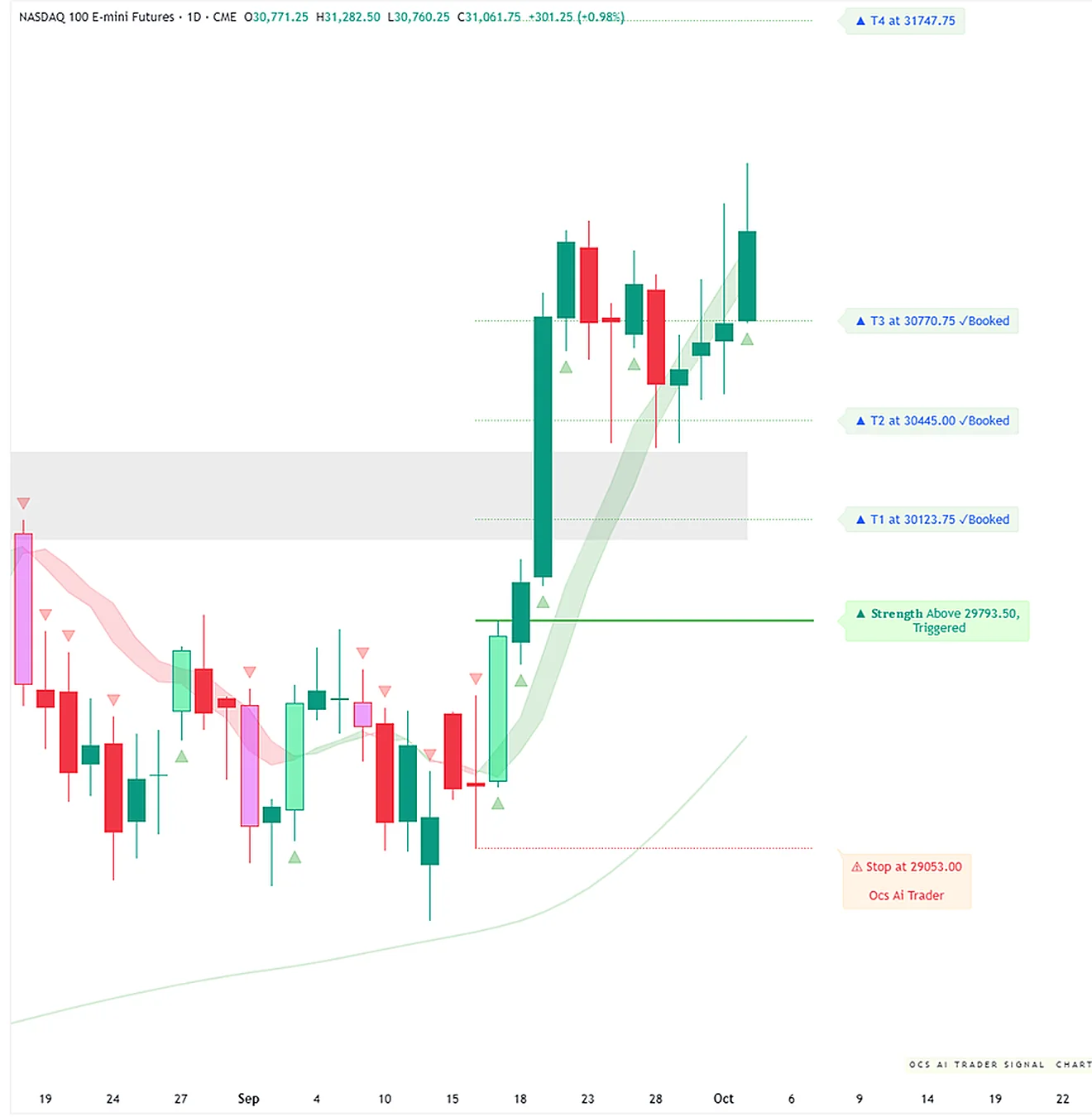
- QQQ/NQ: The Nasdaq is facing acute valuation compression. The primary risk is a breach of the 200-day moving average (data pending), which would confirm a shift in the primary trend.
Metals & Commodities
- GLD: Price: $369.36 (-2.68%). The "Real Yield Trap" is active. As real yields rise, the opportunity cost of holding non-yielding gold becomes prohibitive. The 367-368 range is a key area of support; a failure here could lead to a rapid move toward 350.
Emerging Markets
- BANKNIFTY: The "Yield-Curve Trap" is a major concern. Short-term NIM expansion is being offset by the risk of credit demand destruction. FII outflows are the primary short-term driver of volatility.
Historical Parallels
The current environment bears a striking resemblance to the Q2 2022 period, where "hot" inflation prints forced the Fed into an aggressive hiking cycle. The immediate market response was a "dollar wrecking ball" scenario, where the DXY surged, high-beta tech suffered a 20%+ drawdown, and emerging markets faced severe liquidity stress. The key difference in 2026 is the role of AI infrastructure spending (NVDA/TSM), which acts as a potential buffer that did not exist in 2022.
Outlook & Risk Matrix
Short-Term (1-5 Days)
- Sentiment: Bearish for risk assets, Bullish for DXY.
- Key Driver: Volatility in the bond market and the potential for "panic" positioning in USDJPY.
- Scenario: If DXY breaks through recent resistance, expect a continuation of the rotation out of small-caps (RTY) and into defensive USD-denominated assets.
Medium-Term (1-4 Weeks)
- Sentiment: Cautious.
- Key Driver: The sustainability of the "AI Capex" thesis vs. the reality of higher borrowing costs.
- Scenario: If inflation remains sticky, the market will likely price in a full-blown recession scenario, leading to a "risk-off" environment where even AI-resilient tech (NVDA) begins to correlate with the broader market selloff.
What to Watch
- DXY Strength: Monitor the 106-107 level. A sustained break above indicates a structural regime shift.
- USDJPY Intervention Risk: Watch for any rhetoric from the BoJ regarding the 150-152 level, which could trigger a sudden reversal.
- NVDA Support: Watch the 165 level. A breach here would invalidate the "AI resilience" thesis and likely lead to a deeper correction.
- Real Yields: Monitor the 10-year TIPS yield. If it continues to climb, the pressure on gold (GLD) and growth tech will intensify.
Education and market research only, not financial advice. Charts are OCS AI Trader readings at the time of writing and change with new bars.